
Introduction
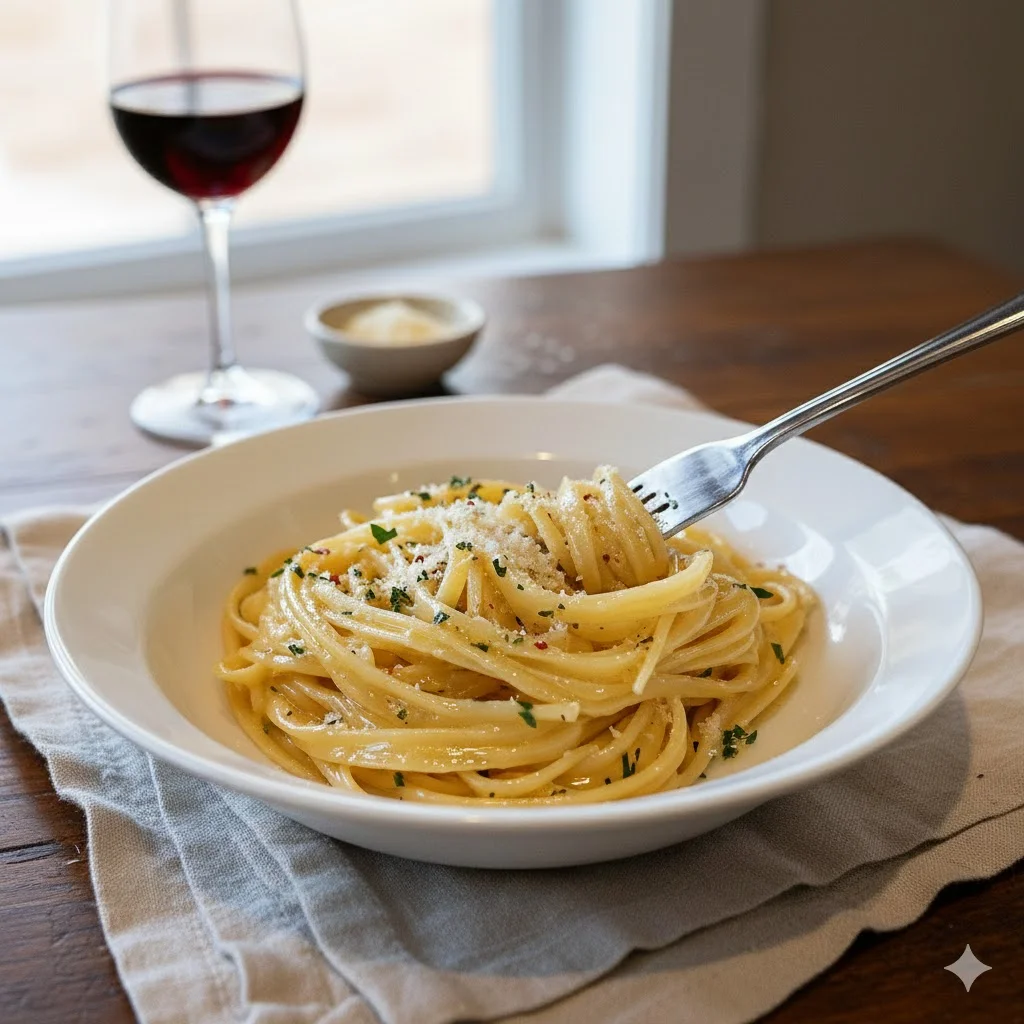
Spaghetti Aglio e Olio is one of Italy’s most beloved minimalist pasta dishes. Originating from Naples, this simple yet elegant recipe relies on just a few pantry staples—garlic, olive oil, chili flakes, and pasta—to create bold, satisfying flavor. It’s proof that great Italian cooking doesn’t need to be complicated; it needs quality ingredients and proper technique.
Ingredients
- 12 oz (340 g) spaghetti
- 1/3 cup extra-virgin olive oil
- 5–6 cloves garlic, thinly sliced
- 1 tsp red chili flakes (adjust to taste)
- 1/2 cup reserved pasta cooking water
- Salt, to taste
- 2 tbsp fresh parsley, finely chopped
- Grated Parmigiano-Reggiano or Pecorino Romano (optional, for serving)
Instructions
- Cook the Pasta
- Bring a large pot of well-salted water to a boil.
- Cook spaghetti until al dente according to package instructions.
- Reserve 1 cup of pasta water, then drain.
- Prepare the Garlic Oil
- Heat olive oil over low to medium heat in a wide pan.
- Add sliced garlic and cook gently until light golden, not browned.
- Add red chili flakes and stir for 10–15 seconds.
- Create the Sauce
- Add 1/2 cup reserved pasta water to the pan and gently simmer.
- Add cooked spaghetti and toss continuously to emulsify the oil and water into a silky sauce.
- Finish & Serve
- Remove from heat, season with salt if needed.
- Sprinkle with fresh parsley and toss again.
- Serve immediately with optional grated cheese.
Tips for Perfect Aglio e Olio
- Do not burn the garlic—burnt garlic will make the dish bitter.
- Use high-quality extra-virgin olive oil; it’s the star of the dish.
- Pasta water is essential—it creates the glossy sauce without cream.
- Traditional versions do not include cheese, but it’s optional.
FAQs
1. Why does my Aglio e Olio taste bitter?
Burnt garlic is the most common cause. Always cook garlic on low heat.
2. Can I make this dish without chili flakes?
Yes. Chili flakes are optional and can be omitted for a mild version.
3. Should I rinse the pasta after cooking?
No. Rinsing removes starch needed to bind the sauce.
4. Can I add vegetables to Aglio e Olio?
Yes—spinach, broccoli, or zucchini can be lightly sautéed and added.
5. What olive oil is best for this recipe?
Extra-virgin olive oil with a fruity or peppery profile works best.
6. Is Aglio e Olio considered healthy?
Yes, when eaten in moderation. It’s simple, uses healthy fats, and contains no heavy sauces.
7. Can I make it gluten-free?
Absolutely—just use gluten-free spaghetti and follow the same steps.








Leave a Reply